Who is actually leading AI in your organization?


Two thirds of newly appointed Chief AI Officers spent their first twelve months writing documentation. Not setting strategy. Cataloging what was already there (Digital Chiefs, 2026).
The pattern shows up in the broader data too. Nine in ten executives across nearly 6,000 firms reported zero measurable productivity impact from AI over the past three years (NBER Working Paper 34836, February 2026). PwC asked the question a different way and got a similar answer. Of 4,454 CEOs surveyed, 56% reported no return on their AI investments. No revenue growth, no cost reduction (PwC 29th Annual Global CEO Survey, 2026).
Most companies are not seeing returns. The 12% who reported both revenue growth and cost reduction shared a few characteristics. They embedded AI across products, demand generation, and strategic decision-making. They built governance frameworks early. They treated AI as a question about how the company actually operates.
The view from inside the CAIO seat at MKG
The CAIO role has grown from 26% of organizations in 2025 to 76% in 2026 (IBM Institute for Business Value, May 2026). The title is now on three out of four org charts. What the role actually looks like once it exists, though, varies enormously from company to company. In some, it sits high enough to set strategy. In others, the appointee spends their first year cataloging AI initiatives that started without them. And in a smaller group, the role lands inside a company that was already building AI capability long before generative models put the work on the front page.
I just stepped into the CAIO role at Medical Knowledge Group. MKG sits in that third group, a company that was already building AI capability long before generative models put the work on the front page.
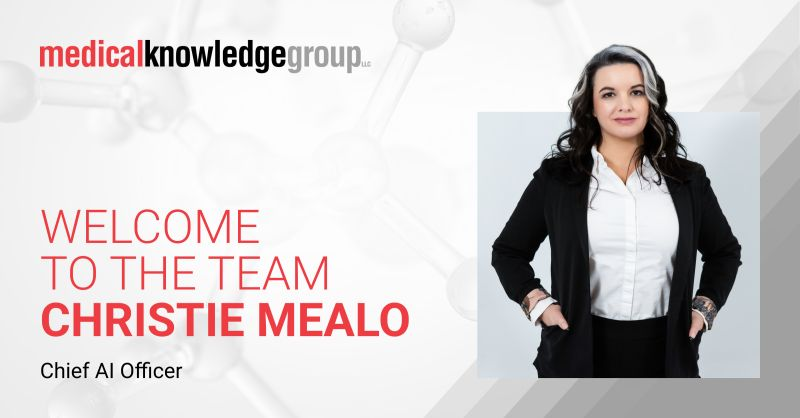
I came on board, I was surprised by how much AI was already integrated into what folks were doing here. All of the opcos under MKG have been not only using, but actively developing, advancing, and deploying AI solutions, with a level of rigor that impressed me.
What stood out to me is that this is a company rooted in AI before it was cool. 81qd was building predictive analytics, machine learning, and proprietary data products long before generative AI was a buzzword. Foundation models are disrupting essentially every industry right now, and rather than being defensive about it, the teams here are leaning in. They are building solutions that compound the value of what MKG already does exceptionally well.
My main takeaway coming into this role is real respect for the strength and embrace of AI across this company by the people on the ground. While other companies are still trying to figure out their AI story, MKG is driving the narrative. The posture across every opco I have met with is leadership, not avoidance, and that is the foundation that makes everything ahead possible.
Before getting to the broader question, one thing worth flagging. I dug into who is actually filling these CAIO seats across the country, and the demographic breakdown, particularly for women in these roles, was striking enough that I wrote it up separately. Read the piece on Medium.
But back to the harder question, it's actually a broader one. What separates the companies that get returns from AI from the ones that don't?
I want to step back for a second because AI has become such a loaded term. When I say AI, I mean everything from rules-based systems to machine learning to deep learning to now generative AI and foundation models. Foundation models are a general-purpose technology. They are changing the world in the same way the internet or electricity did, so there is no ignoring it. Regardless of what I do, change is going to happen.
That said, I think the difference comes down to a few things. One, leaning into top line and bottom line and the narrative together, not in isolation. Two, really focusing on employee education and reinforcing AI augmentation and adoption across the workforce. Challenging employees to try things themselves, share their thoughts and ideas with the whole organization, and celebrate victories together. I have already seen a handful of cases that folks have brought to me (and to others) that are great examples of individual employees who saved time, added value, and drove additional profit just by figuring things out on their own.
Three, and probably most important, going into a new role being respectful of people and the wealth of knowledge they have. Fortunately, everyone I have met here (and I am not just saying this) has been very smart, and very collaborative. I know a lot about AI, building software, and technology, but there is a lot I do not know when it comes to the day-to-day operations and the responsibilities of every person who works here. Going in with that openness, encouragement, and a willingness to learn from each other is critical.
Trust is the most important thing a leadership team can create. Without trust, culture suffers. Without trust, people do not collaborate well. It costs money. I have seen it. I have seen how pervasive a culture without trust can rot an organization from the inside out. I am fortunate to be stepping into a great culture here, and it is my duty to only improve that trust as we usher in the age of AI.
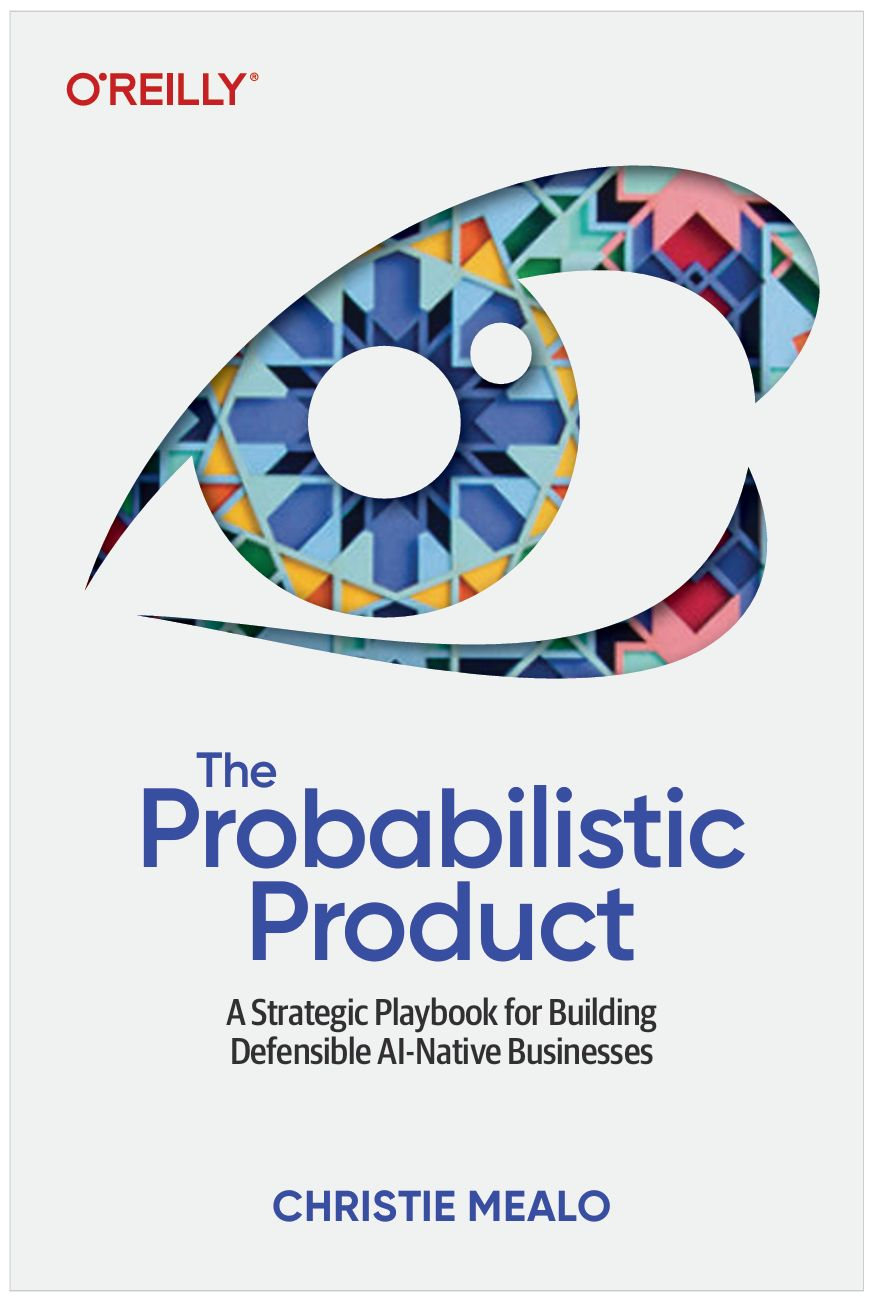
My Book
To jump to another new and exciting personal development, the early release of my book The Probabilistic Product: A Strategic Playbook for Building Defensible AI-Native Businesses is live on the O'Reilly platform. Chapters 1 and 2 are out now, in their first form before full editorial polish. I am putting them out early because I want real practitioner feedback while there is still time to fold it in. If you want to read along, O'Reilly is offering a 30-day free trial of the full platform.
The book is for product leaders, founders, and operators thinking about how to build defensibly in the AI era. Tell me what you think.
Start your 30-day O'Reilly free trial. Use code LFTPP26.
What You Should Read
Six picks plus one to watch. My take on why each one matters right now.
1. Anthropic 2026 Agentic Coding Trends Report Anthropic's eight predictions for how coding work changes in 2026, framed around customer case studies: Rakuten finishing a 7-hour vLLM implementation in one autonomous run, Fountain cutting time-to-staff a new fulfillment center from a week down to 72 hours, CRED doubling delivery velocity. Every case study is a Claude customer, so read it with that lens. The most useful finding is the embedded survey: engineers use AI in 60% of their work but fully delegate only 0–20% of tasks. That gap matters more than the predictions. If you have not read this one yet, highly recommend it. The most talked-about coding report of the year. resources.anthropic.com/2026-agentic-coding-trends-report
2. NBER Working Paper 34836 — Firm Data on AI (February 2026) The actual paper repays the time more than the coverage of it. Methodology covers nearly 6,000 executives across four countries and stands as the most credible international data on firm-level AI adoption we have. This one is quite long and unpolished but has high-quality content. Skim through it and also take a look at the charts. nber.org/papers/w34836
3. PwC 29th Annual Global CEO Survey (2026) PwC surveyed 4,454 CEOs. 56% reported no return on AI investments. The section that matters is the one on what the 12% with results had in common. Skim the rest, then go straight to that breakdown. pwc.com/gx/en/issues/c-suite-insights/ceo-survey.html
4. McKinsey State of Organizations 2026 McKinsey's State of Organizations 2026, published February. 10,000+ senior leaders across 15 countries and 16 industries, surveyed June through September 2025. Only 14% of organizations have leaders consistently championing AI with a clear strategy. 23% qualify as McKinsey's 'AI Pioneers' segment, with clear strategy rolling out across departments. 75% of current roles will need reshaping as AI embeds in workflows. The deeper framing is what McKinsey calls 'business as change': transformation as a permanent operating state, not an episodic project. Worth the read if you want a structural lens on what is actually shifting. mckinsey.com/capabilities/people-and-organizational-performance/our-insights/the-state-of-organizations
5. One Useful Thing — Ethan Mollick (Substack) Wharton professor and co-director of the Generative AI Labs at Penn. His Substack is what AI practitioners actually read every week, even though the business press still defaults to consulting reports. Mollick runs his own experiments, shares the prompts, and his "Leadership, Lab, and Crowd" framework is the most concrete model for standing up AI capability inside an organization. Bonus: he is also local to Philly. oneusefulthing.org
6. Subquadratic — "Introducing SubQ" (May 2026) — one to watch Subquadratic came out of stealth on May 5. The new AI startup announced their first language model, SubQ 1M-Preview, with an interesting claim. Today's transformer models scale quadratically with context length, which is why every enterprise AI system uses RAG, chunking, and retrieval pipelines to work around the cost. SubQ claims a "subquadratic" architecture where compute grows linearly instead, with a research result running on 12 million tokens of context at roughly 1,000x lower attention compute than current frontier models. If the claims hold up in production, the workarounds we built around context limits stop being necessary, and the economics of running long-context AI change fundamentally. TBD on whether the claims hold up. Early access just opened and real-world results are not in yet. Read it with skepticism, but read it. Worth following the updates as the API moves out of private beta. subq.ai/introducing-subq
Who You Should Follow
Voices worth following on AI right now. The list goes broader than CAIOs, mixing researchers, technologists, and community builders who shape how AI actually gets built and used.
Mira Murati CEO of Thinking Machines Lab, former CTO of OpenAI. Her lab publishes research through the Connectionism blog. One of the clearest public thinkers on collaborative AI and human alignment. Active on X. thinkingmachines.ai/blog
Sara Murray, MD VP and Chief Health AI Officer at UCSF Health. Co-authored the paper defining what the CAIO role in healthcare actually means and what the person holding it is accountable for. Her work on AI governance and clinical deployment is among the most rigorous being done publicly in health systems. Speaks at major AI in healthcare conferences. linkedin.com/in/saragmurray
Divya Pathak Inaugural Chief AI Officer at Regeneron. Previously CDAIO at NYC Health + Hospitals, the largest public health system in the US. Presenting research at AAAI 2026. Strong technical background and real health system scale. linkedin.com/in/divya-pathak12
Matt Konwiser CTO, educator, and columnist on conscientious AI design. Writes on governance, bias, and responsible deployment with the specificity of someone who builds systems. One of the clearer practitioner voices on responsible AI inside large organizations. Active on LinkedIn a good friend of mine. linkedin.com/in/mattkonwiser
Jacopo Tagliabue Adjunct Professor of ML at NYU, former co-founder and CTO of Tooso (acquired by Coveo), and creator of the "You Do Not Need a Bigger Boat" open-source ML framework. His "reasonable scale ML" concept (building AI systems that work outside Big Tech budgets) is one of the most useful frames in the field. Writes on Towards Data Science and appears on ML podcasts. Also a good friend. linkedin.com/in/jacopotagliabue
Philly Tech Week Recap
A few catalysts of Philadelphia tech share what their Philly Tech Week looked like from the inside.
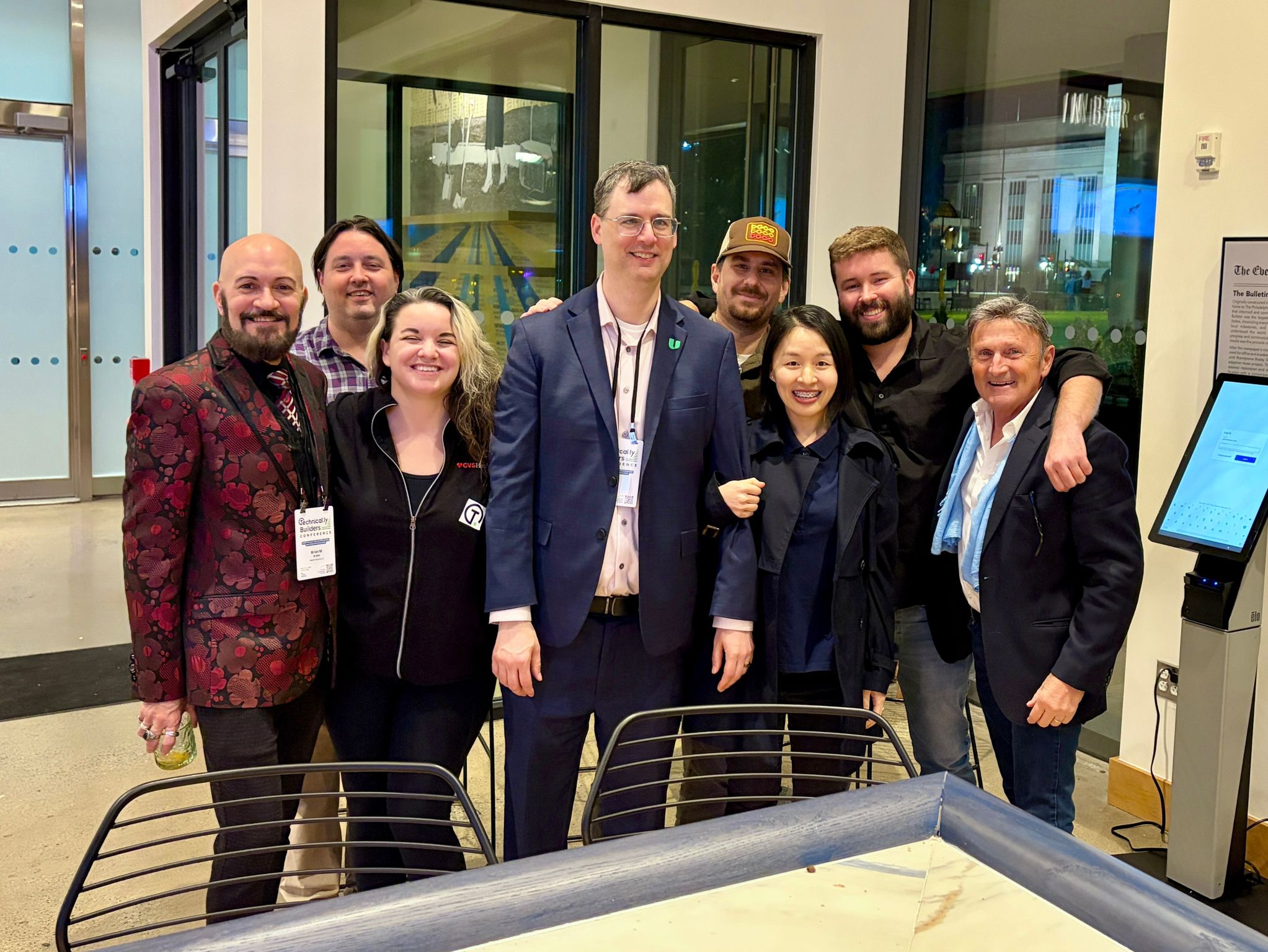
Andrew Maza, Philly Vets In Tech One of my favorite parts of Philly Tech Week was the energy across the ecosystem. Every room felt active and people were genuinely there to connect and build. We ran three programs in one day through VetsInTech: AI discussions in the morning, our Builders Forum in the afternoon, and closing the night with our chapter's one-year anniversary. Jumping between events showed how much momentum Philadelphia tech has right now, and it feels like there is more to come.
Grace Francisco, Philly Builds AI At Philly Tech Week I moderated the inaugural Women Invested panel with investors Antonia Dean, Sheetal Singh Tobin, and Sydney Couval, and gave the keynote at the (Co)nnect event on Enterprise AI in Greater Philadelphia. The through-line of both: Enterprise AI is not just a tech trend, it is a job creation engine. Brookings has identified Enterprise Digital Solutions as the #1 opportunity sector for Southeastern PA. Philly's superpower is not hype culture, it is grit and people who solve hard problems. In the AI era, diverse voices in the room matter more than ever. Philadelphia has the talent, industries, and lived experience to build something better and more inclusive.
Tim Dodd, AI Innovation Network Philadelphia The future of AI will not be defined by who talks about it the most. It will be defined by the organizations willing to thoughtfully apply it to real problems, real operations, and real people. That is exactly the conversation we set out to create at the AI Forum, bringing together everyone from AI researchers and innovators to those simply trying to better understand what AI means for their organizations, workforce, and communities. Because the future will not be built by technologists alone. It will be built collaboratively.
What's Moving in Philly
Powered by Kynra.AI — kynra.ai
Philly Data and AI
Philly Data & AI My monthly event ✨ Tuesday, May 19, 6–8 PM. The monthly Data and AI happy hour at Con Murphy's Irish Pub (1700 Benjamin Franklin Pkwy). The most reliable place to meet the Philly data and AI community in person. RSVP required! meetup.com/philly-data-and-ai
OG Code & Coffee Wednesday, May 20. Code & Coffee Philly's flagship working session. No panels, no pitches, just builders in the same room. Tony Siu has grown the group from a handful of people in 2024 to 4,000+ members. Blockspace Community Coworking, 215 S Broad St. meetup.com/code-coffee-philly
Claude Code Philly Saturday, May 23. Weekly hands-on session for people building with Claude. Prototyping, refactoring, learning the tooling, all skill levels welcome. Turkish Brew, 1444 N 7th St. meetup.com/code-coffee-philly
Coding on Localhost Sundays at Localhost (401 N Broad). Casual afternoon working sessions, BYO project. $5.40 lounge fee at the door, no other commitment. meetup.com/code-coffee-philly
Tech Talk: Pathways to Funding Wednesday, May 20. Panel discussion on funding opportunities for Philadelphia tech startups: venture capital, angel investing, conventional lenders, and grant funding in one conversation. Hosted by the City of Philadelphia Department of Commerce with sponsorship from Ben Franklin Technology Partners. eventbrite.com/e/tech-talk-pathways-to-funding
Research mentioned in this issue
Digital Chiefs 2026. CAIO appointment survey, European sample. digital-chiefs.de/en/chief-ai-officer-2026
NBER Working Paper 34836, February 2026. Firm-level AI productivity data across nearly 6,000 executives in the US, UK, Germany, and Australia. nber.org/papers/w34836
PwC 29th Annual Global CEO Survey, 2026. 4,454 CEOs surveyed on AI investment returns. pwc.com/gx/en/issues/c-suite-insights/ceo-survey.html
IBM Institute for Business Value 2026 Global C-suite Study, May 2026. 2,000 CEOs across 33 geographies on CAIO appointments and AI ROI. newsroom.ibm.com/2026-05-04-ibm-study-ceos-are-reshaping-c-suite-roles-for-the-ai-era
Anthropic 2026 Agentic Coding Trends Report. Eight predictions for how coding work changes in 2026, with customer case studies and embedded engineer survey. resources.anthropic.com/2026-agentic-coding-trends-report
McKinsey State of Organizations 2026. 10,000+ senior leaders across 15 countries and 16 industries on AI-driven organizational transformation. mckinsey.com/capabilities/people-and-organizational-performance/our-insights/the-state-of-organizations
Ethan Mollick, One Useful Thing. Substack newsletter from the Wharton professor and co-director of the Generative AI Labs at Penn. oneusefulthing.org
Subquadratic, "Introducing SubQ: The First Fully Subquadratic LLM," May 2026. Product announcement from a new AI infrastructure company claiming a subquadratic LLM architecture with 12M token context and ~1,000x lower attention compute than frontier models. subq.ai/introducing-subq
Christie Mealo, "I Became One of the Rarest Technology Executives in the Country. Then I Started Counting." Medium. medium.com/@christiemealo