Stop Asking Where to Use AI


A conversation with Shilpa Mudiganti, founder of Her Lead Story, on practical AI transformation and starting with pain before tools.

When I sat down with Shilpa Mudiganti last week, I asked what kind of AI newsletter she would actually want to read. Her answer came fast. She is over rundowns of the next model or capability; she is interested in the stories that illustrate what is already working in real life. That instinct is both practical and well-earned.
Shilpa is the founder of Her Lead Story, where she builds outcome-tied programs for mid-career women, closing the leadership-pipeline gap through measurable advancement in visibility, promotions, and retention, and she came to it after years of digital transformation work inside large enterprises. These days she thinks mostly from the lens of service and customer experience, the part of a business where the distance between what AI promises and what it delivers is hardest to hide. Her default questions are the practical ones: what changed, for whom, and how do you know?
“I’m in the space of I have to make this a reality,” she said, “and not give lectures to people on what the potential is.”
This is something I can identify with directly and this is where most serious AI work sits now. The hype phase is not over, but it has gone quiet where it counts, because most leaders no longer need a talk about what AI could become; they need to know what is changing inside real teams and where the value actually shows up. The wrong first question is still everywhere, and it sounds practical: where can we use AI? Shilpa starts somewhere else: what pain are we actually trying to remove?
Experimentation has a ceiling
Plenty of companies started with the same playbook: give people access, let them experiment, and see what emerges. That was reasonable when the technology was new, but experimentation has a ceiling. In a large company, telling ten or twenty thousand people to go experiment mostly produces personal wins, someone writing emails faster or making a deck less painful, and a thousand individual gains do not add up to a company changing how it works.
“If we go with the messaging of go experiment,” she said, “the benefits are always going to be personal.”
That is the trap. Shilpa’s read is that AI transformation is starting to look like the digital transformation programs she has run before, with one difference: the old version made an existing process digital, while this one lets you ask whether the process should exist at all. The work stops being “add AI to this workflow” and becomes “why is this workflow painful in the first place.” Less sandbox, more operating model.
“High-value work” has to mean something
Every AI conversation now promises higher-value work. Fine, but what is it? Shilpa’s answer was useful because she refused to define it in the abstract and grounded it in the function she knows, which is service and customer experience. Low-value work is the two-day scavenger hunt through systems and inboxes to answer a question the customer needed immediately, and high-value work is the opposite.
“High value work is I could go to the customer with the information they were asking for,” Shilpa said, “and then asking or predicting, you may want this next.”
The definition changes from one function to the next. AI value has to be measured against the work each team is actually there to do, not forced into one shared ROI story. And when AI clears the routine work, the freed time has to land somewhere better. Shilpa’s instinct was reinvestment, spending it on the customer relationship rather than letting it quietly vanish back into the workday.
Start with the pain, not the tool
Customer service is where companies most visibly get this backwards. A company looks at support and sees cost; the customer sees pain. Design the system around the first and hand it to the second, and you get the hostile experiences everyone recognizes.
“I’m totally against using chat bots or automated voice when somebody’s actually picked up the phone to talk to somebody,” she said. “That customer is already in pain and you’re making that person go through more.”
You call a bank or an airline, you need the one human who can fix the thing, and instead you say “operator” three times while the machine pretends not to understand you. That is the company protecting itself from the customer, dressed up as service. Shilpa’s test cuts straight through it: take AI out of the picture for a minute and ask one question.
“If I were given a magic wand, what would I fix?”
Often the honest answer is something other than a voice bot: a cleaner website, better account data, or a support rep who already has your history before the call. The method follows from the test. Pick one function, map what the team really does in a week, sort it into what can be automated, what should be augmented, and what should stay human, and put the people closest to the work in the room, because they know where the process is fake. Only then does the question of where AI fits actually make sense; ask it any earlier and you are likely defending the process you should be redesigning. It is a smaller promise than wholesale AI transformation, and a far more real one.
Three takeaways
1. Experimentation is not transformation. Scattered personal productivity does not become company-level change without structure underneath it.
2. High-value work has to be defined by function. The definition comes from the work, and the metrics follow it.
3. The best AI question starts without AI. If you had a magic wand, what pain would you remove for the customer, the employee, or the process? Start there.
Kimi K3 Updates
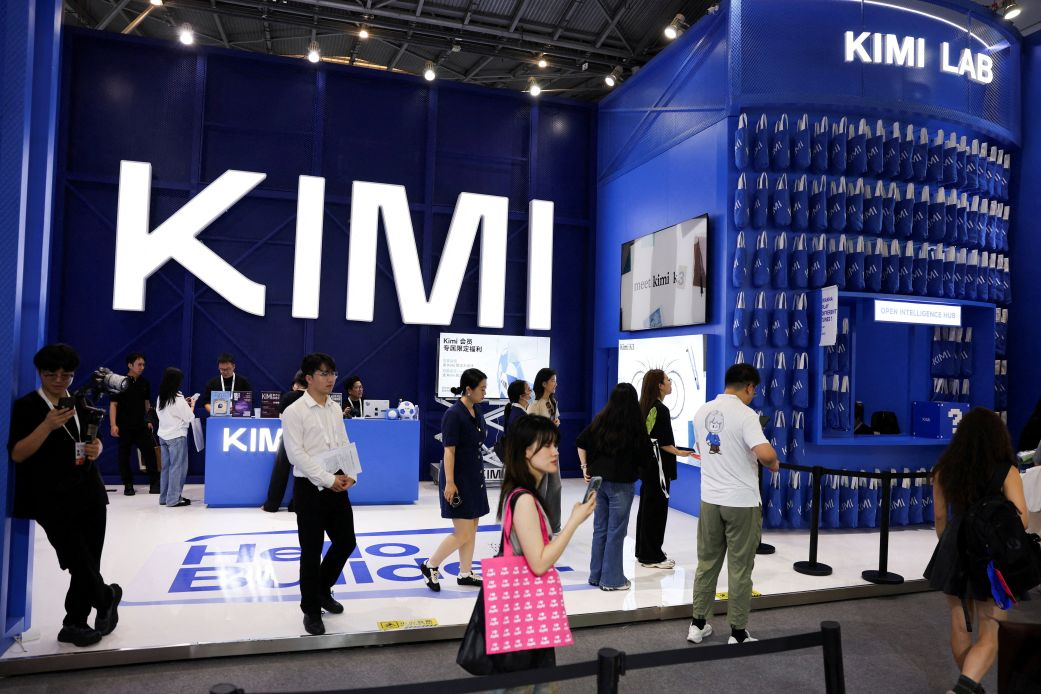
The biggest AI news of the last two weeks, in plain English.
- Moonshot AI, a company in China, released a powerful new AI model called Kimi K3 on July 27, 2026.
- The surprise is that they made it free. Anyone can download Kimi K3 and run it on their own computers, instead of paying to use a model from a US company like OpenAI or Anthropic.
- It is very good. Independent tests rank it among the top few AI models in the world, just behind the best from Anthropic and OpenAI (as of August 7, 2026).
- It spooked the market. A strong, free Chinese model rattled investors, and chip-company stocks fell the day it launched (TechCrunch, July 18, 2026).
- The company cashed in. A few days later, Moonshot raised $3.5 billion, which valued it at $35 billion (Bloomberg, July 29, 2026).
- Why it matters: when a top model is free to run yourself, companies and even governments can build their own AI without paying ongoing fees. The catch is that you still need expensive computer chips to run it, and some buyers will not trust software built in China.
What you should read
Five short reads on the practical side of AI, in plain terms: what really works, where customers feel the pain, how service jobs are changing, the hidden work of babysitting AI, and the risk of speeding up the wrong thing.
1. AI Experiments Need Domain Experts. Here’s How to Support Them.
Arvind Karunakaran, Katherine C. Kellogg, and Batia Wiesenfeld, Harvard Business Review, August 6, 2026 · AI adoption, domain experts, transformation
Real AI wins do not come from handing everyone a chatbot. They come from bigger, built-for-the-job solutions, and you need the people who know the work to figure out how AI should actually be used.
- The people who do the work every day need real time and real say, not just a login.
- Telling everyone to “go try AI” gives you scattered personal wins, not real change.
2. How Much Time Do Your Employees Spend Botsitting?
Rebecca Hinds and Paul Leonardi, Harvard Business Review, August 5, 2026 · hidden labor, AI oversight, productivity
AI is supposed to save time, but people often spend hours babysitting it, checking and fixing what it produces. HBR calls this “botsitting,” and opens with an AI scheduling assistant that turned into a second job.
- AI can take one task off your plate and quietly add a new one: watching over it.
- If you are counting AI’s payoff, do not forget the time people lose supervising it.
3. How to Recognize When Your Customers Want You to Act
Pengxiang Zhang, Eric Yanfei Zhao, and Sali Li, Harvard Business Review, August 5, 2026 · customer signals, CX, timing
Companies usually track what customers want and how they feel, but they miss a third thing: when the customer expects them to actually do something.
- AI can help sort through mountains of customer feedback fast.
- It comes down to timing: knowing when a customer expects action, not just what they asked for.
4. How AI Impacts the Customer Service Job Market
Kate Leggett and Michael O’Grady, Forrester, July 16, 2026 · customer service, labor, AI operations
Forrester says AI in customer service is really a team-redesign problem more than a chatbot problem. More requests get handled without adding people, but the jobs that stay get harder.
- AI changes what service jobs are, not only how many there are.
- It shifts which skills and roles the team needs next, like handling tricky cases and keeping customers.
5. Making AI Productivity Deliver Real Value
BCG, 2026 · productivity, operating model, value capture
BCG’s point in plain terms: saving time only counts if you put that time to better use, and bolting AI onto a messy process can just make the mess faster.
- Speeding up work without cleaning it up first just speeds up the low-value stuff.
- Real value comes from rethinking how the work is done and who does what.
Who you should follow
Five people worth following on the practical, customer-facing side of this issue: where AI meets real deployment, real service, and real outcomes.
Shilpa Mudiganti · founder, Her Lead Story (AI transformation, digital transformation, and customer experience)
The voice behind this issue's main piece: practical AI transformation that starts with customer and employee pain, not the tools.
Linkedin: https://www.linkedin.com/in/mudigantishilpa/
Her Lead Story: https://herleadstory.com
Blake Morgan · customer experience futurist; author and host of The Modern Customer
The customer-first leadership side of this issue, on how companies close the gap between the experience they describe and the one customers actually get, increasingly where AI, automation, and expectations meet.
Jeannie Walters · founder, Experience Investigators; customer experience strategist
Tactical CX that stays close to outcomes, retention, loyalty, and service quality, and to what companies need to fix before they call anything transformation.
Teresa Torres · founder, Product Talk; continuous discovery and customer interviewing
The cleanest start-with-the-customer-problem voice on this list, and pointedly not AI-first.
Annette Franz · founder and CEO, CX Journey; culture, employee, and customer experience
For the employee-to-customer thread beneath AI transformation: her Golden Thread ties culture, employee experience, customer experience, and business outcomes, which echoes Shilpa’s case for structure over scattered experimentation.
What’s moving in Philly

A few rooms worth being in around Philly in August, from civic tech to agentic AI, with a couple of venue-light listings to register for before you show up.
Code for Philly August Hack Night · Aug 11, 6:00–8:00 PM · Indy Hall Clubhouse, 709 N 2nd St The monthly civic-tech work session. Doors at 6, introductions at 6:15, then two hours of project work. Pizza with a vegan option, and several project teams run hybrid through the Code for Philly Slack if you want to join remotely. Bring a laptop.
Smart Launch Momentum Mixer · Aug 12, 6:00–8:00 PM · Triple Bottom Brewing Hosted by the Women's Opportunities Resource Center. Entrepreneurs, relationship building, and a walk through the resources available to small businesses in the city.
Philadelphia Founders Sessions · Aug 12, 6:00–8:00 PM · Ben Franklin Technology Partners A panel of local startup founders on how they actually got going, hosted by TiE Philly with Ben Franklin. Same slot as the Momentum Mixer, so this is the pick if you want the founder story rather than the resource map.
VetsinTech Greater Philadelphia Chapter: Code, Coffee & Community · Aug 15, 10:00 AM–12:00 PM · Time & Peace Café and Gallery The Greater Philadelphia chapter's morning meetup for veterans working in or moving into tech.
Claude Code Philly · Aug 15, 1:00–4:00 PM · Turkish Brew Coffee & Code Philly's weekly Saturday session on building with Claude, covering live pair-building, prompting for refactors, and debugging and architecture work. Bring a laptop and something you are stuck on. Picks up right where VetsinTech leaves off if you want to make a day of it.
Philly Builds AI Founder Series: "Your AI Isn't the Product. The User Experience Is." · Aug 19, 4:00–5:30 PM · Philadelphia, venue on registration The part I keep coming back to here is the premise, which is the argument I would make about most of what gets called an AI product right now. Venue is held behind the Luma registration, so sign up before you plan around it.
Neighborhood Nights: After Hours Coworking · Aug 19, 10:00 PM–12:30 AM · Indy Hall Clubhouse, 709 N 2nd St Late-night coworking at Indy Hall, running until half past midnight. Useful if your building time is after everyone else's day ends, and it stacks with the founder series earlier that afternoon.
Philadelphia AI Tech & Finance Networking Event · Aug 21, 7:00–9:00 PM · Tapster Philadelphia A tech-and-finance networking night aimed at established professionals. Good if you want the AI conversation closer to capital and business development.
(powered by Kynra)
Beyond Philly
I updated my list of events worth attending in 2026 to reflect the second half of the year. Check it out to see what's new!
Copyright 2026 - Christie Mealo