I Barely Type Anymore

What my voice-first workflow reveals about the emerging intent interface
Issue 6 · July 2026
I barely type anymore…
Much to my husband’s annoyance, I spend most of the day talking to my devices.
I still use a keyboard, but its role in my work has changed. I reach for it when I need to make a precise edit, clean up a table, touch code, or decide whether a sentence actually works.
The keyboard has not disappeared, but it has moved downstream.
I used to type to create and edit. Now I speak to generate, explore, explain, and communicate. I type mostly when I need precision and control.
Somehow, this happened without my making a conscious decision about it.
As of this month, I have dictated almost 300,000 words using Wispr Flow. Fifty-nine percent of them went into AI prompts, 25% into work messages, and 10% into email.
The main thing voice has done is not make me a faster typist. It has made it dramatically easier for me to give AI more context, more often.
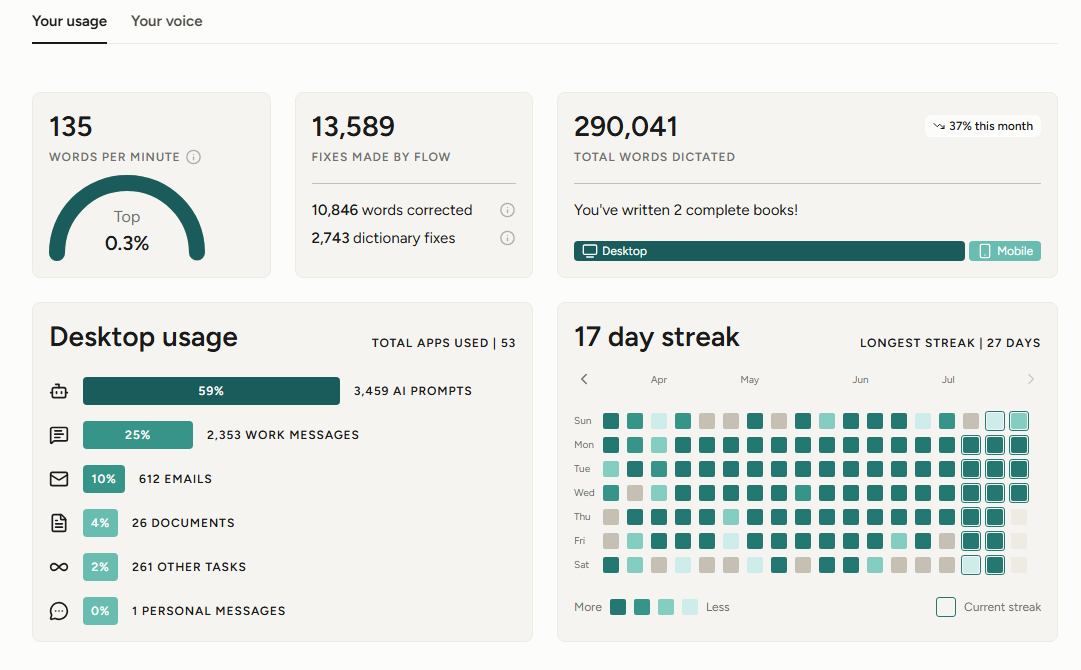
A quick disclosure: Wispr did not sponsor this. I have just become an avid user / generally incapable of shutting up.
That is the difference between dictation as a feature and voice as an interface.
Old dictation mostly wrote down what you said, including the false starts, changed minds, trailing clauses, and places where a normal human sentence falls apart halfway through. You saved time by speaking, but then gave much of it back editing.
Voice gets more interesting when the system can interpret the mess.
What changed for me was not simply that speaking became faster than typing. The machine became capable of receiving a thought before I had finished organizing it.
I can give it the context, qualifications, half-formed connections, and moments when I change my mind without first compressing everything into a neat little prompt. The model receives more of the thought as it actually exists in my head, then helps me turn it into something usable.
Typing a prompt still feels like a task. I have to stop, organize the thought, decide what context matters, formulate the ask, and determine whether the idea is worth pursuing in the first place.
When I can speak while the thought is still forming, that threshold drops close to zero. And something I once did occasionally has now become the default.
Voice is not perfect. It works almost everywhere I would otherwise type, but it can still be awkward when I need to manipulate something very precisely: moving a sentence three lines up, adjusting one value in a table, modifying a specific line of code, or obsessing over the final six words of a paragraph.
Those moments are becoming increasingly narrow. Voice has become my default interface; the keyboard is what I occasionally reach for when I need direct control over the output.
Typing also makes me edit while I generate, sometimes killing an idea before it has enough time to form. Voice gets the rough version out before I can overmanage it. That version is often bad, but a bad first pass can still show me what I was trying to think.
This may sound like a small personal productivity change, but it reflects something larger.
Lowering the friction of expressing an idea changes how often we use AI, how much context we give it, and how much of the work we are willing to hand over.
That changes behavior. Behavior changes workflows. Eventually, workflows change what we expect products to do for us.
My increasingly loud household is one visible sign of the emerging intent interface.
In Chapter 3 of my book, “The Intent Interface: Voice, Natural Language, and the Agent Architecture,” I describe this as a four-layer inversion. Input is moving beyond typing and clicking. Models are interpreting intent rather than merely processing commands. Interfaces are becoming more generative and adaptive. Agents are beginning to carry out work that users once completed step by step.
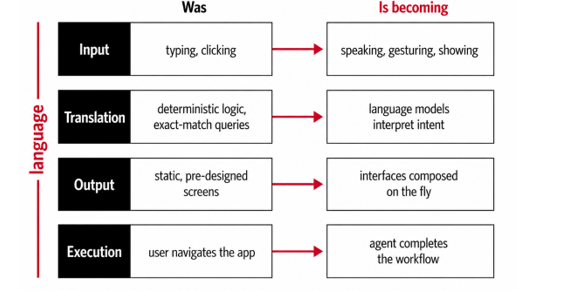
Figure 3-1: The Four-Layer Inversion, from Chapter 3
Voice is where many of us will feel this inversion first.
The larger shift is not simply that we are speaking instead of typing. We are moving from operating software one command at a time to expressing an intent and letting the software determine how to help us accomplish it.
That changes the role of the interface. It also changes the skills required of the person using it.
When the machine can interpret conversational language, the bottleneck moves. The question is no longer whether I can translate my thought into the exact format the software requires. It is whether I can express what I actually want, provide the right context, and exercise judgment over what comes back.
I have not abandoned the keyboard. It is just increasingly where the work ends, rather than where it begins.
How to Become Voice-Native
Voice increasingly works almost anywhere you would otherwise type. The shift happens when you stop treating it as an occasional dictation feature and start treating it as a general interface.
- Install a real voice layer. Use Wispr Flow, Superwhisper, Monologue, or another tool that works across your applications rather than only inside a single text box.
- Stop saving it for special occasions. Use it for prompts, emails, messages, documents, searches, notes, revisions, and everyday instructions. The more places it is available, the faster speaking becomes your default.
- Talk the way you actually think. Include the context, corrections, tangents, qualifications, and moments when you change your mind. Modern voice tools are valuable precisely because they can interpret more than polished dictation.
- Watch where your words go. After a few days, look at the distribution across AI prompts, messages, email, notes, and other work. That will show you how voice is changing your behavior, not merely how many words you dictated.
My Book
Chapter 3 Now Available Online!
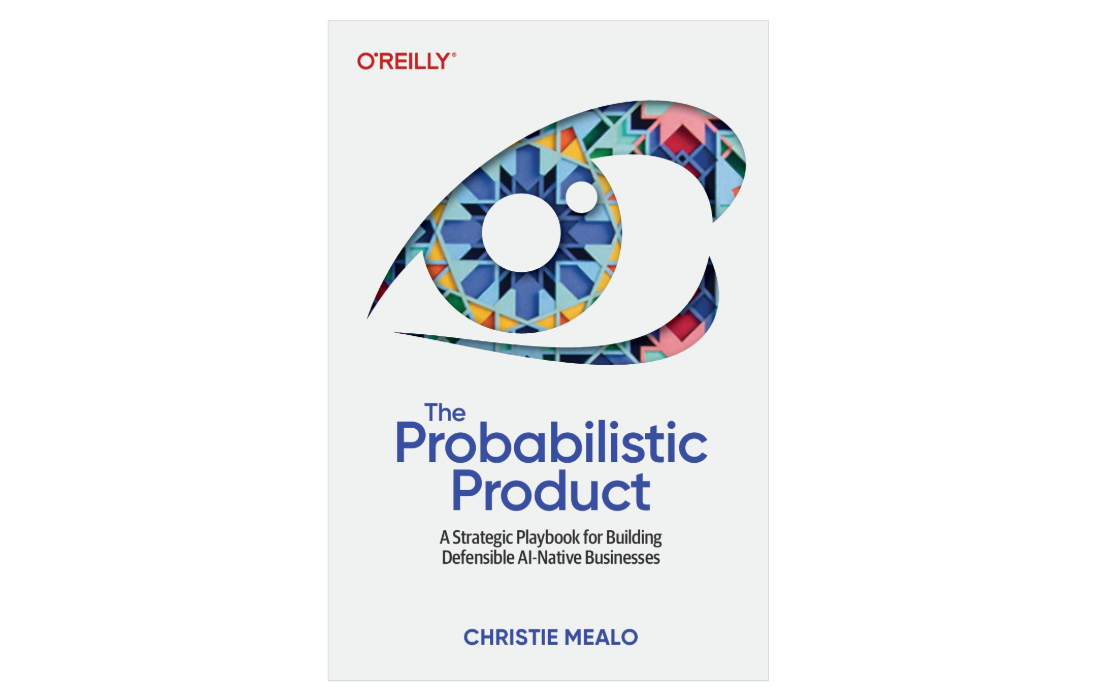
If the four-layer inversion is the part of this issue you want to explore more deeply, Chapter 3 of my book, The Probabilistic Product: A Strategic Playbook for Building Defensible AI-Native Businesses, develops the full argument.
It follows the shift from voice and natural language through generative interfaces, vibe coding, and agents. It examines how input, translation, output, and execution are changing together, and what happens when the interface no longer simply waits for us to operate it.
The chapter then gets to the strategic question underneath all of this: when everyone can rent the same intelligence and reproduce the same interface patterns, where does lasting product advantage actually come from?
The early release of the book is now live on the O’Reilly platform. Chapters 1, 2, and 3 are available in their first form, before full editorial polish.
I am putting them out early because I want real practitioner feedback while there is still time to incorporate it. The book is for product leaders, founders, and operators trying to build defensibly in the AI era.
If you read it, tell me what you think.
Start your 30-day O’Reilly free trial. Use code LFTPP26.
What You Should Read
Five recent pieces worth your time
1. The Agentic Leadership Playbook: A Scaling Strategy for CTOs and CIOs
Mark Abraham and Neveen Awad, BCG, July 2026 · agents, leadership
Most companies experimenting with agents remain stuck because they are introducing new technology without redesigning how the work gets done.
Why it matters: BCG argues that scaling agents is primarily an organizational challenge involving people, processes, and operating habits, not a software implementation problem.
Read The Agentic Leadership Playbook
2. Design AI Systems That Actually Strengthen Human Reasoning
Tamisier-Fayard, Evgeniou, and Fayard, Harvard Business Review, July 2026 · judgment
AI systems should prompt people to think more carefully, not simply hand them an answer that allows them to stop thinking.
Why it matters: Simple design choices, such as asking questions, preserving AI-free steps, and presenting multiple options, can help protect the judgment people need to develop.
Read Design AI Systems That Actually Strengthen Human Reasoning
3. How AI Is Reshaping Human Skills and Thinking
American Psychological Association, Monitor on Psychology, July 2026 · cognition
The effect AI has on human thinking depends heavily on how deliberately we use it.
Why it matters: Passive reliance can weaken judgment and creativity, while purposeful use can help people question assumptions, explore alternatives, and think more deeply.
Read How AI Is Reshaping Human Skills and Thinking
4. AI Agent Security: Four July Attacks, One Shared Flaw
The Next Web, July 2026 · security, trust
Several recent attacks exploited the same underlying weakness: agents connected to private data, outside content, and tools that can take action.
Why it matters: The more capable an agent becomes, the more consequential its permissions and connectors become. Security cannot remain an afterthought once software begins acting for us.
Read AI Agent Security: Four July Attacks, One Shared Flaw
5. Figma’s Design Lead Expects More, Not Less, From Candidates in the AI Age
Business Insider, on Figma VP Noah Levin, July 16, 2026 · craft, hiring
AI has made polished-looking output easier to produce, so Figma’s design leadership is raising the bar for what distinguishes a strong candidate.
Why it matters: When almost anyone can generate something that looks finished, judgment, taste, craft, and the ability to explain why something should exist become more valuable.
Read Figma’s Design Lead Expects More From Candidates in the AI Age
Who You Should Follow
A few people thinking seriously about what comes after the prompt box.
Katie Parrott
Writer at Every, focused on how AI changes the experience of work
Katie explores how AI changes the texture of creative and knowledge work, rather than treating it purely as a productivity story.
Amelia Wattenberger
Partner at Sutter Hill Ventures and product lead on Augment Code’s Intent; formerly GitHub Next
Amelia is one of the sharpest voices on what comes after the chat box and why every AI interaction should not collapse into the same text field.
Linus Lee
AI interface researcher at Thrive Capital; formerly on Notion’s AI team
Linus examines how AI interfaces can become more generative and capable without sacrificing control.
Maggie Appleton
Design engineer at GitHub Next and creator of visual essays about AI interfaces and tools for thought
Maggie’s work is especially useful for understanding why design and judgment become more important as the underlying technology becomes easier to access.
Hassan El Mghari
Lead, Developer Experience at Together AI
Hassan is worth following for practical builder energy, fast demonstrations, open-source AI applications, and tools that make the new interface layer feel tangible.
What’s Moving in Philly
A few rooms worth being in around Philly over the next couple of weeks.

AI Philly Skill Share · Jul 28 · Blockspace Philly, Philadelphia, PA
A practical skill share for seeing what local AI builders are testing and learning from one another.
Business Networking Breakfast · Jul 28 · Cafe Lift, Haddonfield, NJ
A general networking breakfast across the river in Haddonfield, lighter on AI than the rest of the list but an easy room for making new connections.
Pennovation August Open House · Aug 5 · Pennovation Center
An open house at Penn’s innovation hub and a good opportunity to see what the local startup and research community is building.
Philadelphia Tech Mixer & Social · Aug 7 · Time, 1315 Sansom St.
A Center City mixer for the local technology, AI, and data community.
Composio Saturdays · Aug 8 · Turkish Brew
A hands-on Saturday focused on connecting AI agents to applications and tools.
(Powered by Kynra)
Copyright 2026 - Christie Mealo