The $200,000 AI Question: Do You Still Need That Hire?


Issue 5 · July 2026
Featured in this issue
- AI keeps getting budgeted as software. The return shows up in labor. My conversation with Chris Handy, Head of AI at TrueBlue, on why the AI ROI question is really a headcount question.
- "Nine times out of ten, the process is designed around people."
- A saved hour isn't a saved dollar until it turns into something real: more shipped, faster turnaround, fewer errors, or a hire you didn't have to make.
- Plus the latest reads, people, and events worth your time.
The ROI of AI Is Not Where We Keep Looking
There is a strange little accounting problem sitting underneath most enterprise AI conversations. We keep treating AI like a software decision. Which vendor? Which license? Which model? Which enterprise plan? Which team gets access? Which department owns the bill? Those questions matter. They are practical, unavoidable, and sometimes painfully annoying. But the real conversation is labor.
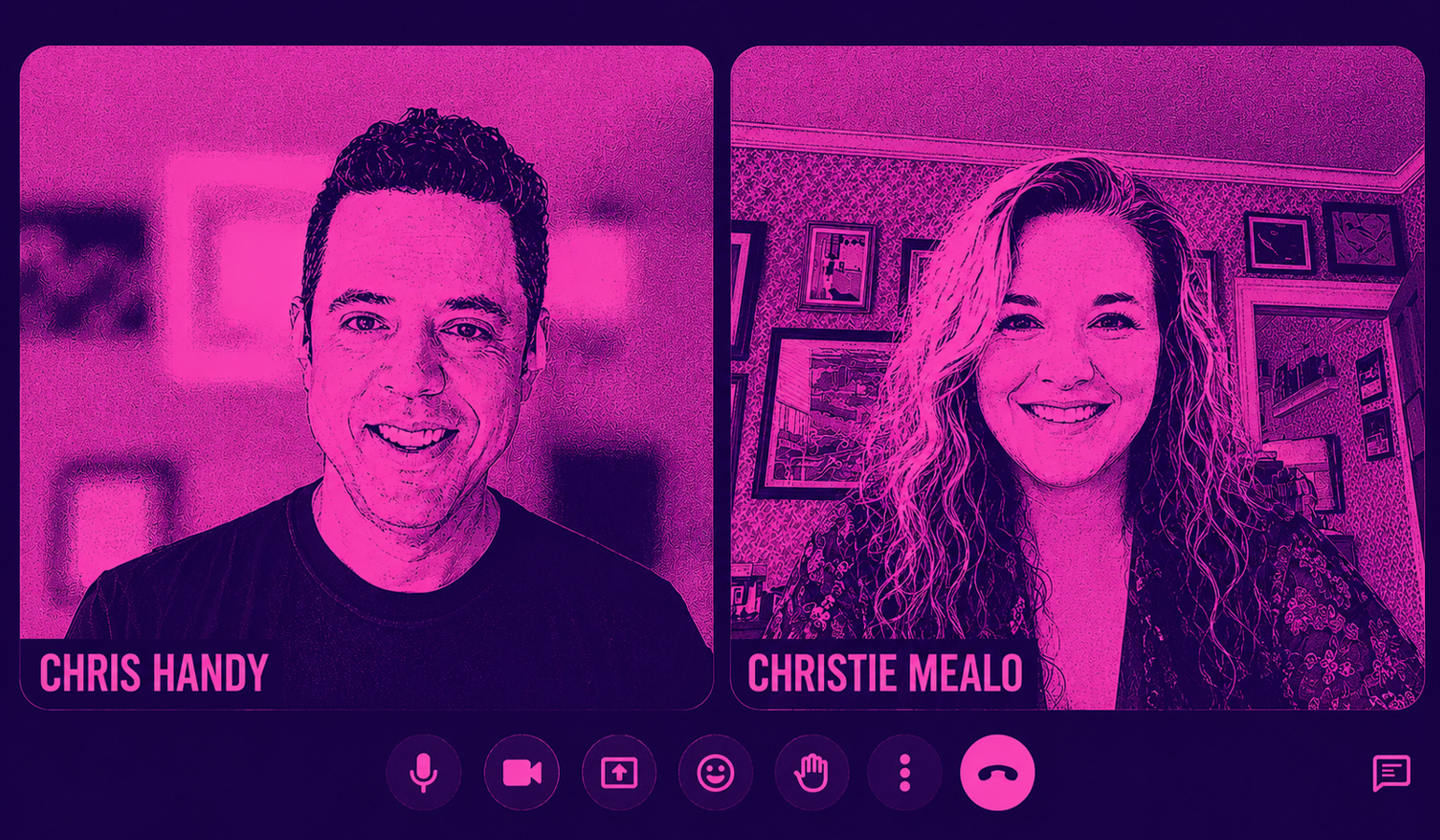
I was talking about this recently with Chris Handy, who has been thinking through many of the same questions from his side: AI enablement, enterprise tooling, staffing, and what happens when companies start looking at AI not as an experiment, but as part of the operating model.
Chris Handy is currently the Head of AI at TrueBlue, where he leads the company's AI strategy and platform initiatives. Before diving into AI, he spent more than 20 years leading software engineering teams and driving digital transformation across product development, cloud platforms, and enterprise technology. He's passionate about helping organizations move beyond the AI hype to build practical, scalable solutions that create real business value.
I asked him whether AI should be treated as an IT cost or a labor cost. His answer was basically: both, but not equally.
“So I think the cost is still IT,” Chris said, because IT is the group buying the licenses, managing security, supporting users, monitoring usage, and handling all the operational plumbing. But the business case belongs to the functions.
“The business case still says labor,” Chris said. “Typically the AI business case is a labor efficiency business case. We can do more with less.”
That phrase gets used so often that it has almost become meaningless. “Do more with less” can sound like a euphemism, a slogan, or the corporate version of pretending everyone is fine while the house is on fire. But underneath the cliché is the actual operating test: if a team is using AI every day, something in the work should be different.
Does the team need fewer incremental hires? Can it support more clients? Can it get work out the door faster? Can it reduce the amount of rework? Can people spend more time on strategy and less time formatting, summarizing, checking, moving, copying, pasting, reconciling, and hunting for information? Chris made the headcount version of that question very plain.
“You had four more headcounts for next year,” he said. “But you're spending $200,000 a year on ChatGPT or Claude, right? So, do you still need that person? Yes or no?”
I told Chris that one of the things I have been working through is how to measure ROI when everyone wants AI licenses, but you have limited visibility into what those licenses are actually producing. The clean version is to do process mapping: go function by function, identify the key weekly workflows, estimate how long they took before AI, estimate how long they take after AI, and convert the time savings into a dollar figure using an average labor rate. That gives you a number. But does the number mean anything?
A saved hour is not automatically a saved dollar. A saved hour only matters if it becomes something real: more work shipped, faster turnaround, fewer errors, better thinking, more client capacity, or avoided hiring. Otherwise, the time may technically be “saved,” but the value is invisible.
Chris challenged this in the right way. When I said you might see more revenue or more output but struggle to attribute it directly to AI, he asked the obvious question: “But is that because of AI though, or can you attribute it to that?” We all want clean attribution. We want a spreadsheet that says: here is the AI spend, here are the hours saved, here is the dollar value, here is the ROI.
But organizations are not physics problems. They are messy systems full of people, incentives, constraints, habits, and unofficial workflows everyone knows exist but no one has documented. So the better starting point may not be perfect attribution. It may be disciplined directional evidence. What workflows changed? What outputs improved? What work no longer requires the same level of effort? What hiring plans should be revisited? What would have broken without AI? What new work became possible?
Chris made another point that I think is even more important: most companies are still thinking about AI as a way to augment existing work. Take the process as it exists today, add AI, and make parts of it faster. That is fine. It is probably where most companies need to start. “If you're looking to augment with AI, I think it's one way to look at it,” Chris said. “If you're looking to redesign or completely rebuild with AI, I think that's a very separate conversation.” And then he put the reason plainly. “Nine times out of ten,” Chris said, “the process is designed around people.”
Processes are not neutral. They encode the limits of the people and tools available at the time they were created. They reflect what humans could hold in their heads, how specialists needed to coordinate, how approvals needed to flow, how work needed to be passed between teams. AI does not eliminate judgment. It does not remove accountability. It does not magically fix bad strategy, bad data, or bad management. But it does change the shape of what is possible.
The risk is moving too slowly and calling it prudence. Chris put that part bluntly too: “If you try to incrementally step through AI adoption, you risk kind of being caught out there and being too late or too slow.”
The risk on the other side is moving so quickly that the organization loses the people it needs to bring along. “If you go too fast,” he said, “then you risk losing people along the way or proper change management.” So yes, we should measure time savings. Yes, we should look at defects, cycle time, throughput, and adoption. Yes, we should ask whether a tool is worth the cost.
But we should also ask a harder question:
Would we design this process the same way if we were starting today?
That question is where AI moves from tool adoption to operating model change.
It is also where the conversation starts to feel less like procurement and more like strategy.
Three Takeaways
1. AI spend may sit in IT, but AI value shows up in labor.
The invoice is not the business case. The business case is what changes in capacity, hiring, quality, speed, or output.
2. Time saved needs a destination.
Hours saved are only meaningful if they convert into something observable: more throughput, better work, faster delivery, reduced rework, or avoided hiring.
3. The real question is not “How do we add AI?”
The better question is: “Would we still design the work this way if we were starting from scratch?”
What you should read
1. Can AI answer the $3 trillion question?
Tim Fernholz, TechCrunch, July 9, 2026
The AI industry has already spent so much on chips and data centers that, by David Cahn's estimate, it needs roughly $3 trillion in revenue to justify the buildout. The question isn't whether AI can pay off, it's whether the payoff becomes visible at that scale.
https://techcrunch.com/2026/07/09/can-ai-answer-the-3-trillion-question/
2. The IDE is dead, long live the ADE
Nick Hodges, InfoWorld, July 8, 2026
Coding is starting to look less like one developer typing and more like one person directing several AI agents at once. The tools are changing to match: built for managing agents, not for one human doing one task.
https://www.infoworld.com/article/4193975/the-ide-is-dead-long-live-the-ade.html
3. Cost versus value: Managing agentic AI system performance
McKinsey Quarterly, July 8, 2026
An AI agent can try, call other tools, fail partway, and try again before it finishes a task. So what you actually pay for is the whole attempt, not the tidy per-token price on the pricing page.
https://www.mckinsey.com/capabilities/quantumblack/our-insights/cost-versus-value-managing-agentic-ai-system-performance
4. The Harness Effect: How Orchestration Design Sets the Token Economics of Enterprise Agentic AI
Muayad Sayed Ali et al., arXiv, July 8, 2026
How you wire an AI system together, not just which model you pick, can move the cost a lot. In this study, changing only that wiring cut cost per task, time, and token use. One study, so treat it as a strong signal rather than a settled rule.
https://arxiv.org/abs/2607.06906
5. Why trusted context is becoming the currency for enterprise AI
Robert Kramer, InfoWorld, July 7, 2026
AI is only as reliable as the company data behind it. Feed it messy or badly governed information and even a smart model gives sloppy answers, which is why so many projects shine in the demo and wobble in production.
https://www.infoworld.com/article/4192413/why-trusted-context-is-becoming-the-currency-for-enterprise-ai.html
Who you should follow
Shreya Shankar
AI systems researcher; databases, human-AI interaction, DocETL, EvalGen
Worth following for a research-grounded view of evals and AI data work that still stays close to messy users and workflows.
https://www.linkedin.com/in/shrshnk/
Claire Vo
Founder and CEO of ChatPRD; product leader and host of How I AI
Worth following for a product executive's view of how AI changes PM work without pretending product judgment disappears.
https://www.linkedin.com/in/clairevo/
Jiaona Zhang
CPO at Laurel; former leader at Airbnb, Dropbox, Webflow, and Linktree
Worth following for a product leader's view of AI-native team design, company operating systems, and how PMs become builders again.
https://www.linkedin.com/in/jiaona/
Sarah Guo
Founder of Conviction; AI-native venture investor and No Priors host
Worth following for a sharper market read on AI-native companies and where serious builders are putting their time.
https://www.linkedin.com/in/sarahxguo
Deedy Das
Partner at Menlo Ventures; former Glean founding team and Google Search
Worth following for a builder-investor view of enterprise AI, infrastructure, and useful workplace AI.
https://www.linkedin.com/in/debarghyadas
What’s moving in Philly

Five rooms worth being in around Philly across the back half of July, from a civic hack night to a hands-on session wiring up AI agents.
- DataPhilly and Philly Data & AI Happy Hour · July 21 · Con Murphy’s. The data and AI crowd’s regular happy hour, this month joined with the DataPhilly meetup. Low-key, and easy to drop into cold.
- Code for Philly July Hack Night · July 14 · Indy Hall Clubhouse, 709 N 2nd St. Code for Philly’s monthly hack night, where the work is civic: volunteers building tools for local nonprofits and public projects. A good room if you would rather put skills to use than talk shop.
- TechSpecialists: Empowering AI, Data & Tech Careers and Networking · July 23 · Philadelphia, location TBD (register online). A cross-industry careers-and-networking mixer; the venue goes out to registrants, so sign up first.
- Composio Saturdays: let AI agents orchestrate your apps in three hours · July 25 · Turkish Brew. Coffee & Code Philly running a hands-on session wiring AI agents across everyday apps, start to finish in an afternoon.
- Coding on Localhost: Connecting the Community · July 26 · Localhost (Philly). A second Coffee & Code Philly session the next day, looser than the first: coding side by side and meeting whoever shows up.
(powered by Kynra)
Copyright 2026 - Christie Mealo